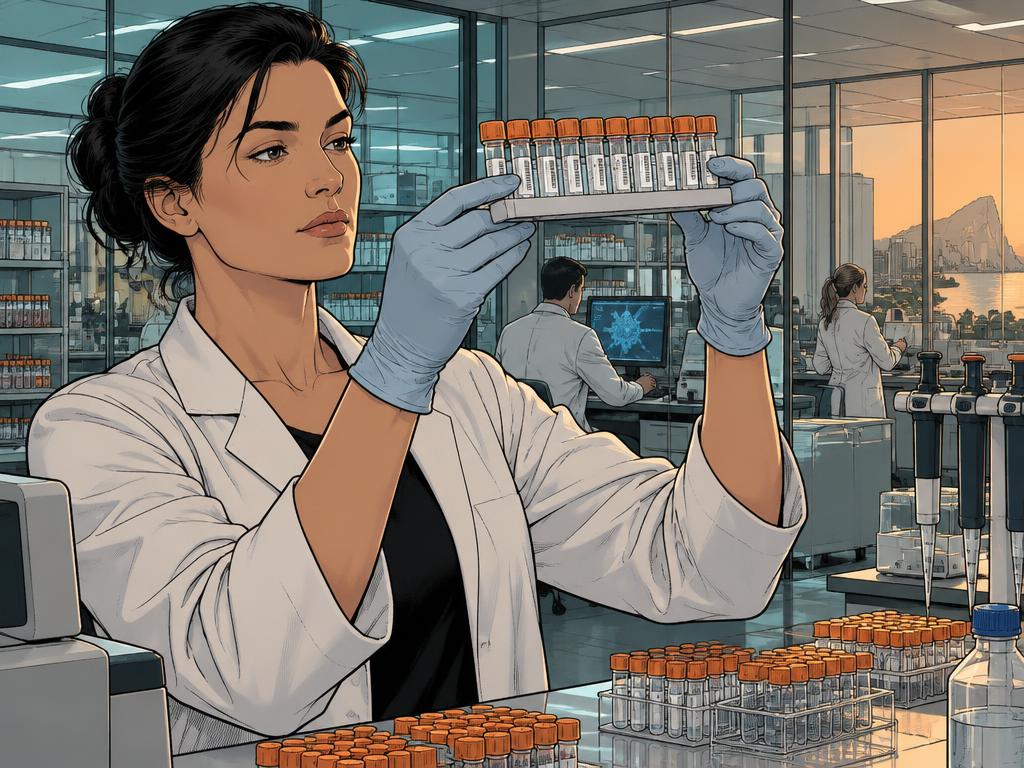
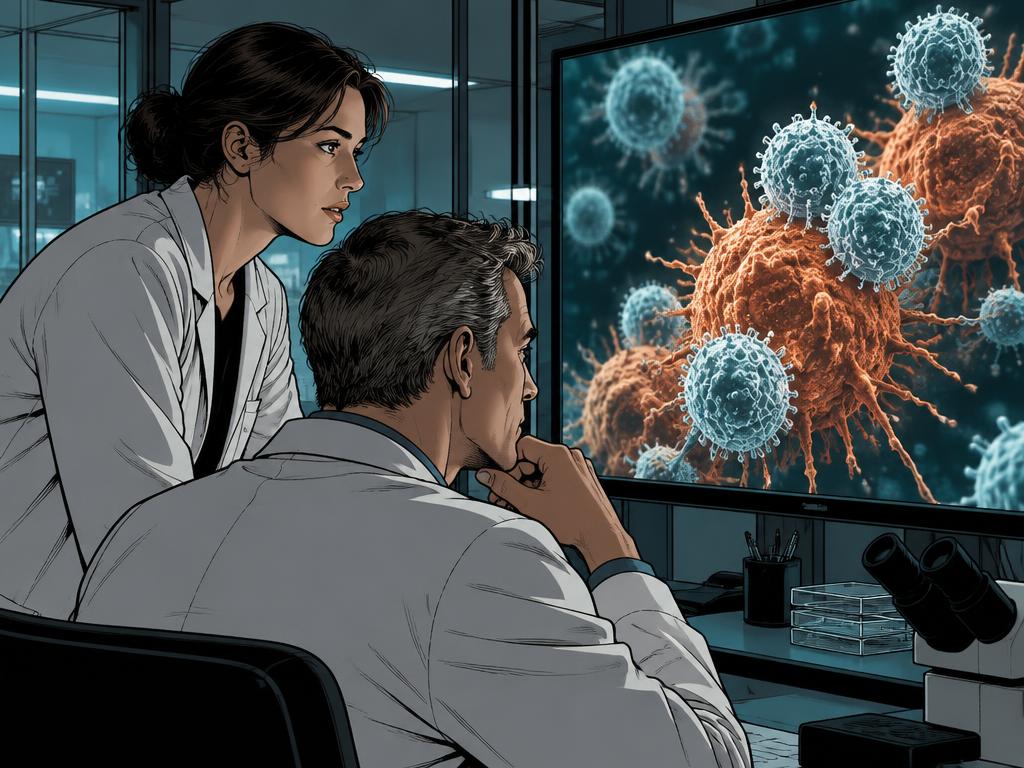
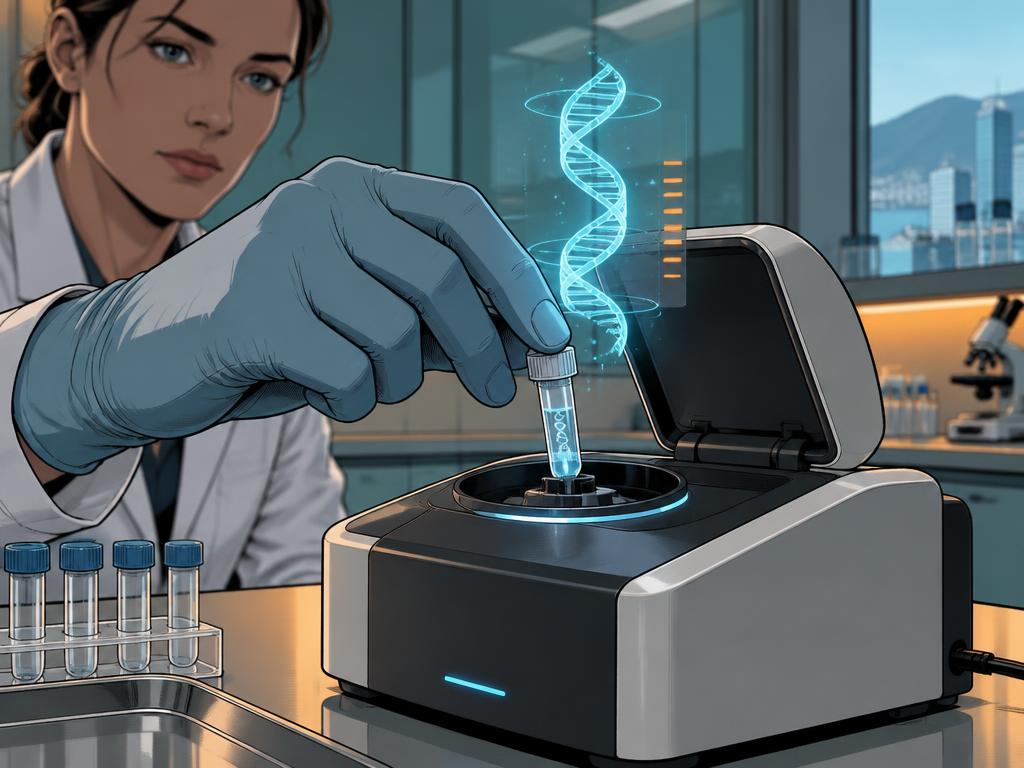
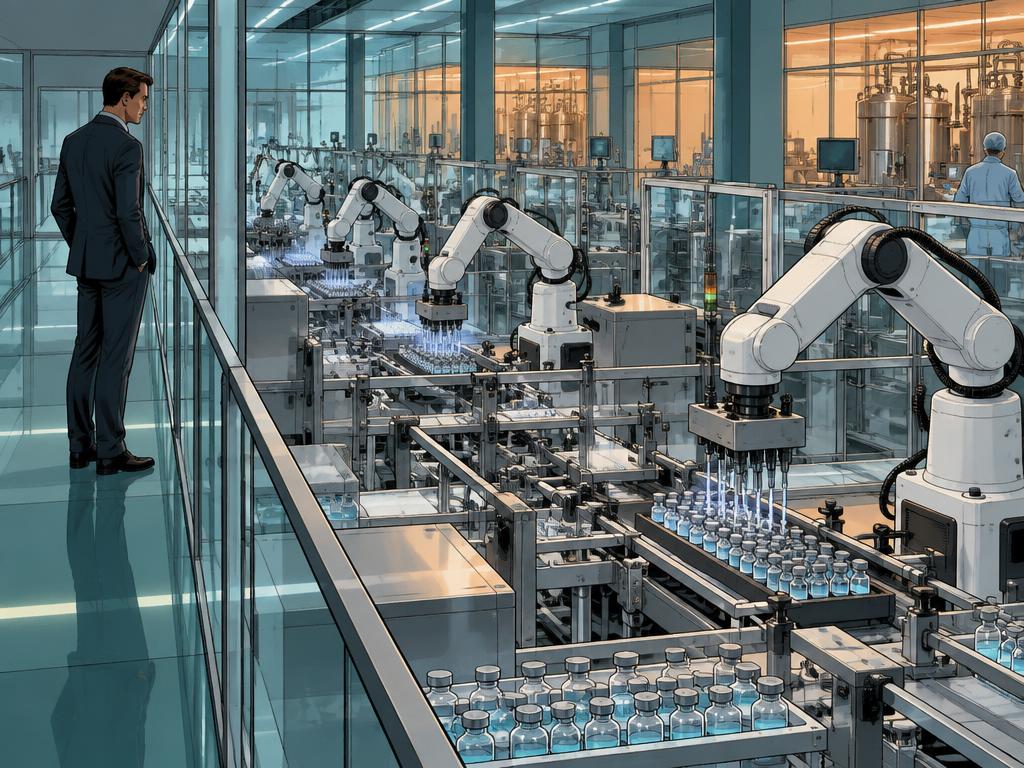
Understand the tumour
Analyse its particular features to identify targets that the immune system could recognise.
Belgian biotechnology · Personalised RNA
A graphic novel for investors, in the great Belgian comics tradition.
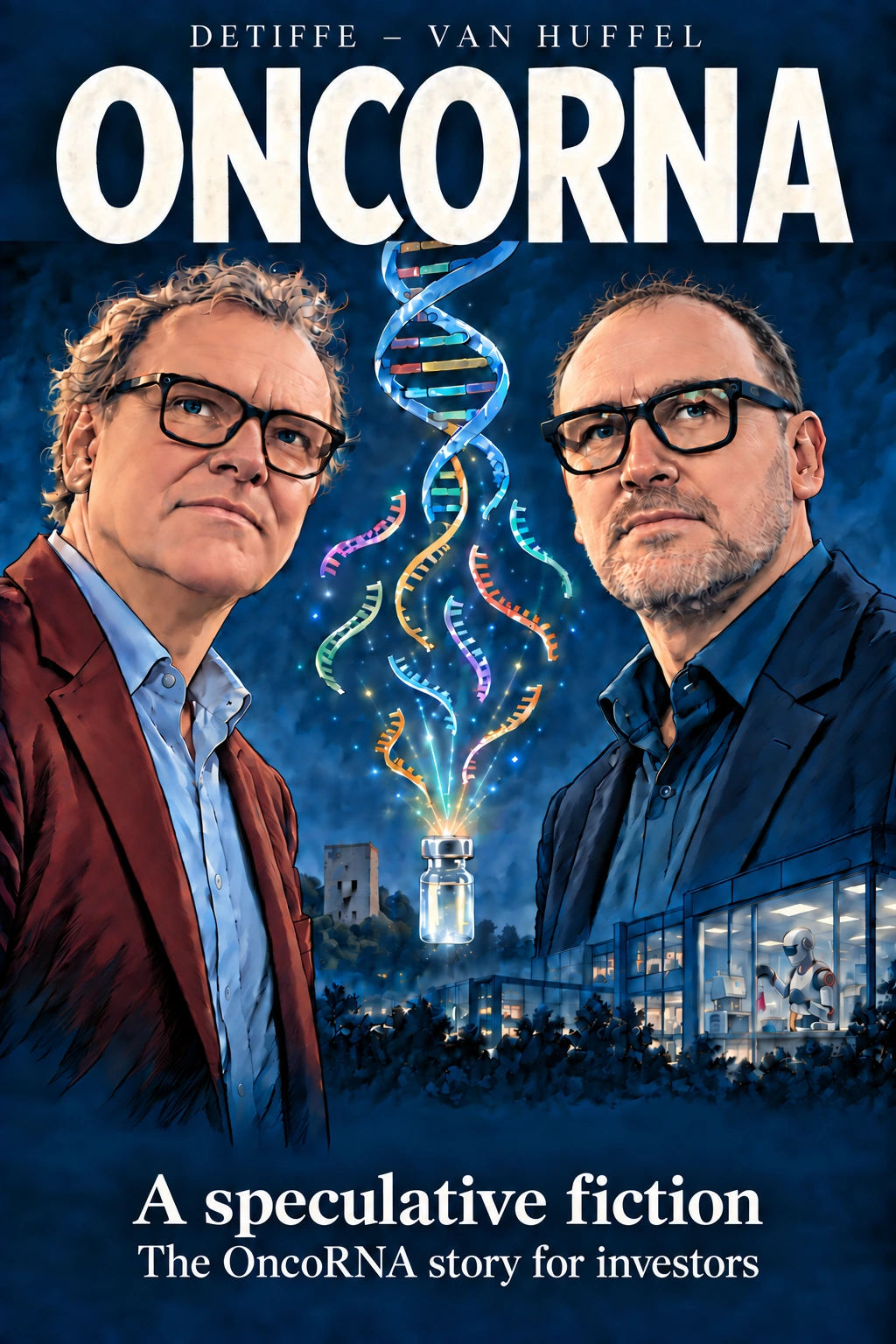
Designing therapeutic vaccines around the unique features of each tumour. Discover OncoRNA’s scientific ambition and the people behind it.
OncoRNA-Omics: say it out loud, it sounds like comics.
Preparing for the first clinical phase
01 / Our approach
Every tumour has its own characteristics. OncoRNA aims to make these the starting point for personalised immunotherapy, helping the immune system recognise its targets.
Our approach uses many distinct RNAs produced from a pool of synthetic DNA. Each RNA carries its own information: multiple messages brought together in one strategy.
Analyse its particular features to identify targets that the immune system could recognise.
Design a set of distinct RNAs, each carrying antigenic information.
Develop the process, controls and studies needed to progress towards human trials.
02 / Development
Preclinical results and a developing intellectual property portfolio underpin the next stage of the project.
Initial immunogenicity results in a mouse model.
A superior immune response for the pool versus the concatenated-RNA model in the preclinical comparison performed.
A family of applications to protect the project’s developments.
December 2026 — a new and final preclinical experiment with ULB. A preventive study in mice will compare 96 tumour targets with 20, measuring tumour growth, survival and T-cell responses. The team approaches this final step with confidence.
Transfer the process and lipid formulation, prepare GMP manufacturing, validate controls and compile the regulatory dossier.
Start Phase 1 in Q3–Q4 2027 and continue into 2028, subject to the necessary funding and approvals.
Aim for Phase 2 and prepare for industrial scale-up, depending on the results of the earlier stages.
03 / The people behind the science
OncoRNA began with a conviction shared by Jean-Pol Detiffe and Christophe Van Huffel: the unique features of each cancer may open new therapeutic avenues.
Entrepreneurship & development
Research & scientific approach
04 / Investors
More, better, easier, faster, cheaper.
The project prototype brings together 121 distinct RNAs for 121 neoantigens, a capability demonstrated by project data. For context, Moderna and Merck’s V940/intismeran encodes up to 34 neoantigens.
In the project’s preclinical comparisons, the pool produced a superior immune response versus the concatenated-RNA model. It also includes candidates ranked lower by prediction tools that may nevertheless trigger a response, aiming to cover tumour diversity and clonality more fully.
Synthetic DNA templates replace steps associated with plasmid-based approaches, producing the RNAs through a simpler process with fewer steps.
A simpler process supports the ambition of accelerating the manufacture of personalised preparations.
Robotic production and simple mixtures support the objective of reducing costs and making personalised vaccines more affordable.
A €5 million total funding objective, bringing together business angels, a specialist fund and a public-sector investor.
Scientists and entrepreneurs from the sector, brought together around the project.
A healthcare or biotechnology fund to support clinical development.
A contribution adjusted to the business angels’ participation, bringing the total to €5 million.
We are seeking investors; no commitment is presented as secured.
05 / Competitive landscape
Following targeted therapies and checkpoint inhibitors, personalised therapeutic RNA vaccines are opening a new chapter: designing treatment around the mutations unique to each patient’s tumour.
First era
Second era
Third era
Emerging era
Three architectures
Platforms begin with a similar logic for selecting neoantigens, but they do not manufacture the same pharmaceutical object.
Moderna · BioNTech
OncoRNA
Transgene · Nouscom
Why now
Progress by major programmes reduces the risk around the therapeutic principle. OncoRNA brings an architecture capable of representing more targets, with the ambition of manufacturing a personalised medicine more simply, faster and at a more accessible cost.
Summary based on the OncoRNA state-of-the-art review, September 2026.
The characters in the story
Two co-inventors, pivotal encounters and the characters of a speculative story. Each sheds light on a different side of the journey: scientific, human or industrial.

The entrepreneur
Founder of OncoDNA and co-inventor, he connects research, teams and funding. Patients’ expectations drive his commitment.
Inspired by a real person
The scientist
Enthusiastic and exacting, he turns questions into research directions. His notebooks of ideas sit alongside maps for his next travels.
Inspired by a real personThe oncologist
She supports patients and upholds rigorous clinical research. Scientific precision and care for people guide her decisions.
Fictional characterThe patient
She wants to be there to see her daughter become an engineer. Her first contact, her doubts and her hope of seeing her graduate bring a human thread to the story.
Fictional characterThe engineer
She turns diagrams into production modules and supports local teams with precision and a sense of humour.
Fictional characterQuality control · IT and AI
He contributes to quality control by developing IT and AI tools for monitoring operations and tracing batches.
Real person · Dramatised roleThe investor
He weighs an invention’s potential, risks and trade-offs. His discussions with Jean-Pol place funding decisions at the heart of the story.
Fictional characterThe humanoid from Beaumont
He embodies a vision of robotic production in a cleanroom under human supervision: a glimpse of the industrial ambition explored in the graphic novel.
Fictional robot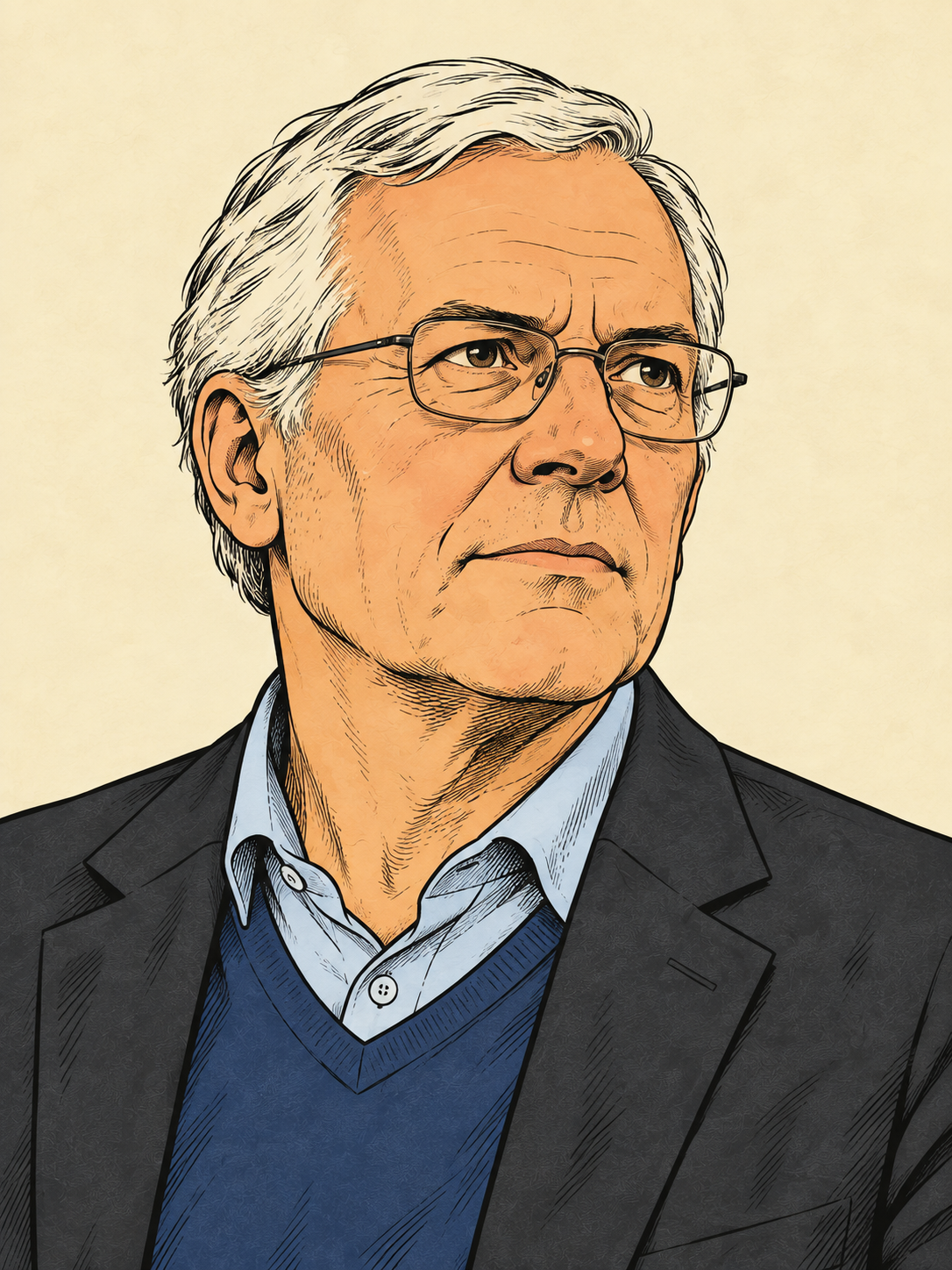
The pivotal conversation
A dramatised phone conversation with Jean-Pol connects the race for a COVID vaccine with new thinking about cancer.
Real person · Dramatised appearanceThe fictional characters and their journeys illustrate possible future developments in the story. Appearances by real people are dramatised and do not constitute an official endorsement of the project.
05 / The graphic novel
From the birth of an idea to the ambition of a campus in Belgium: discover the OncoRNA journey in 55 illustrated pages.
Speculative fiction inspired by a real scientific journey. The clinical and industrial scenes illustrate possible future developments.